Bibbullmun Water Systems & Hydro-Geological Governance
Subterranean Springs, Gnamma Stone Engineering & Waugal Creation Hydrology
Freshwater management across south-western Australia relied on an advanced understanding of hydro-geology, subterranean aquifer dynamics, and atmospheric cycles. Bibbullmun water engineering centered on the preservation of granite gnamma holes (deep weathering pits in granite inselbergs) and natural claypan springs that provided permanent water security across arid summer months.1
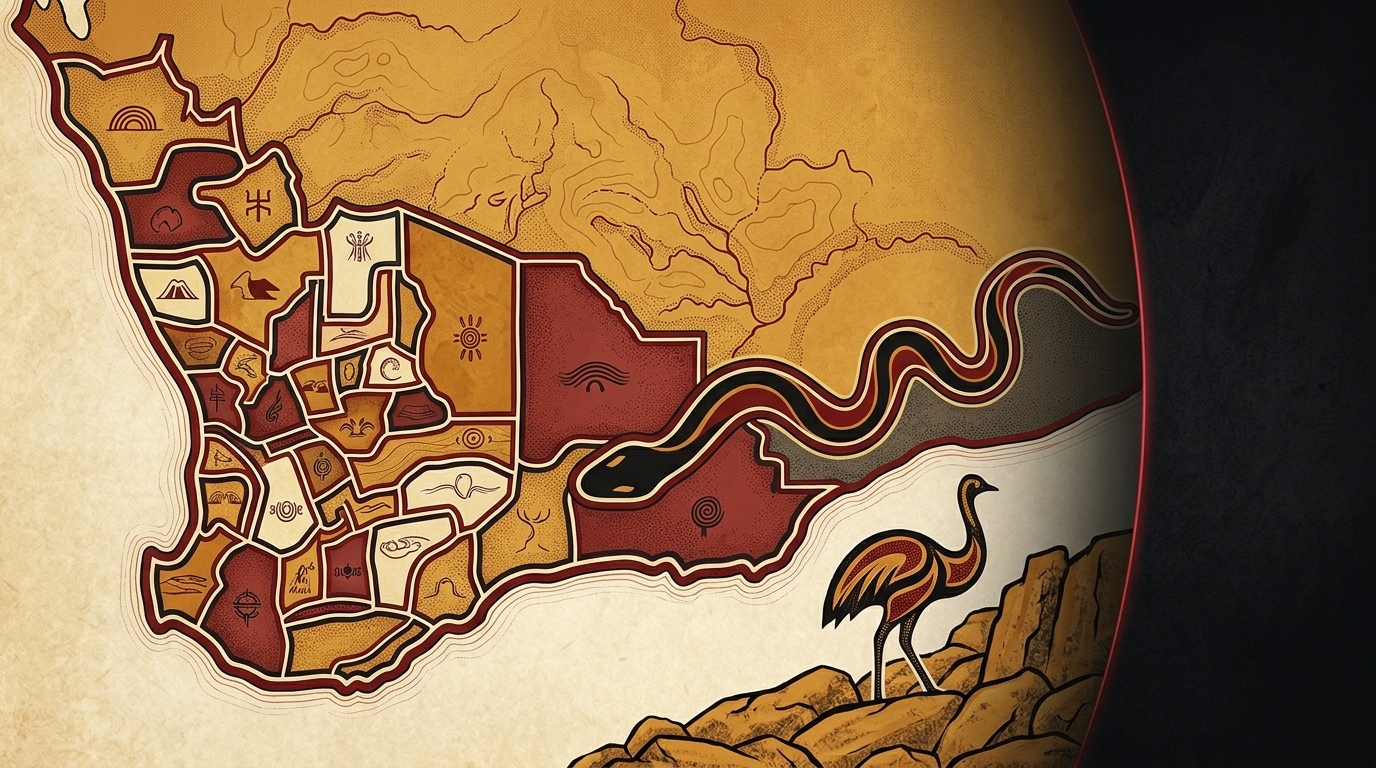
Customary water law was codified through sacred Waugal creation narratives. The Waugal, the ancestral water-serpent deity, was understood to inhabit deep river bends, underground channels, and permanent wetlands, establishing strict spiritual and ecological prohibitions against water contamination.2
1. Gnamma Hole Engineering & Evaporation Control
Granite gnamma holes represented sophisticated freshwater storage reservoirs. Bibbullmun hydro-engineers identified subterranean solution hollows in granite outcrops, enlarging them through controlled thermal expansion using fire and cold water. To prevent evaporation during peak Bunuru heat and block animal access, harvesters fitted heavy, flat stone slabs (Gnamma lids) over hole openings.3
In her ethnographic notes (NLA MS 365), Daisy Bates recorded:
"The granite waterholes were maintained with scrupulous care. Young men were assigned to clean out fallen leaves and sediment before winter rains, and stone covers were replaced after every fetch of water. To leave a gnamma hole open to the sun was regarded as a grave breach of native law."
2. Claypan Springs & Subterranean Aquifer Filtration
Along the Swan Coastal Plain and Victoria Plains, water stewards developed claypan filtration techniques. Natural springs emerging through sandy topsoils were encircled with woven paperbark (Gnamul) lining and coarse gravel beds, filtering silt and providing crystal-clear drinking water even during drought conditions.4
3. Waugal Creation Lore & Hydro-Ecological Law
Waugal lore functioned as an enforceable legal code governing water quality. Taboo prohibitions forbade camping directly beside permanent spring heads, requiring family groups to set up shelters at least several hundred meters away. This protocol protected water sources from human waste and allowed wildlife unhindered access during night hours.5
4. Colonial Enclosure of Springs & High Court Water Rights
British colonial settlement heavily targeted First Nations water catchments. Settlers fenced off vital springs along pastoral routes, resulting in violent friction as local clans defended their ancestral water security. In contemporary native title jurisprudence, First Nations water rights remain a critical domain of litigation, as High Court rulings in Mabo v Queensland (No 2) (1992) and Akiba v Commonwealth (2013) affirm that customary water usage rights survived Crown sovereignty claims.6
5. International Water Sovereignty & UNDRIP Article 25
Under international human rights law, Article 25 of the UN Declaration on the Rights of Indigenous Peoples (UNDRIP) mandates that First Nations have the right to maintain and strengthen their distinctive spiritual relationship with their traditionally owned waters. Modern hydro-geological research increasingly validates traditional Bibbullmun water stewardship as an indispensable model for sustainable water management in drying Mediterranean climates.7
The primary source citations and AGLC4 legal references for Water Systems are documented on a separate subpage in compliance with AGLC4 standards.
View AGLC4 Footnotes & Citations